B4D-G3R
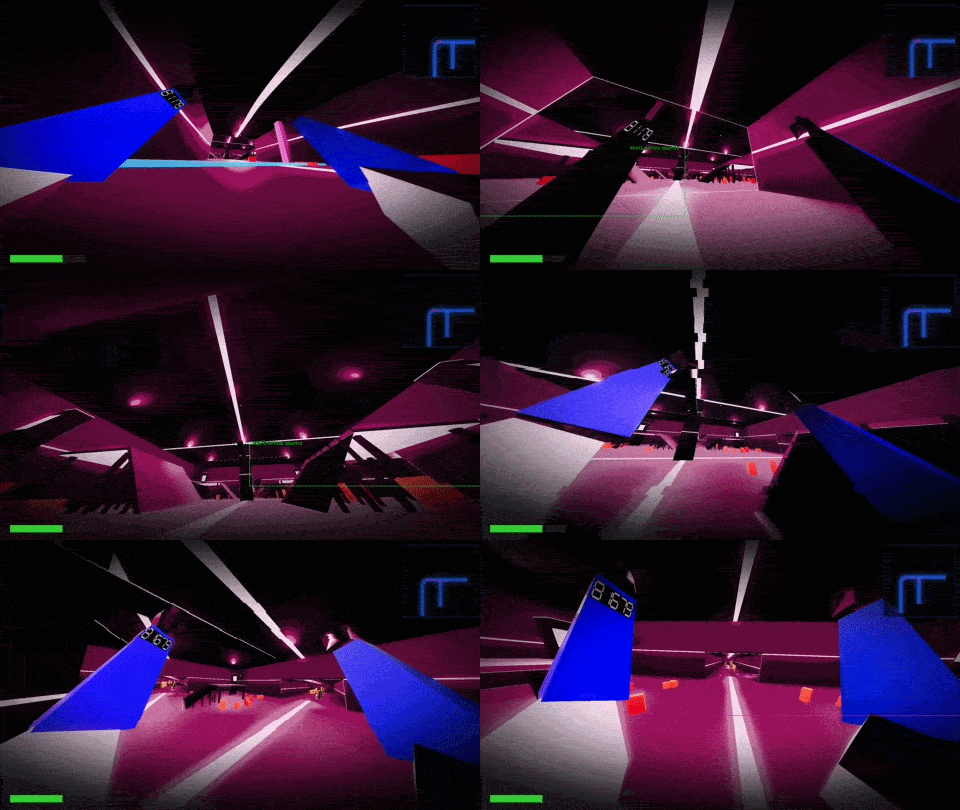
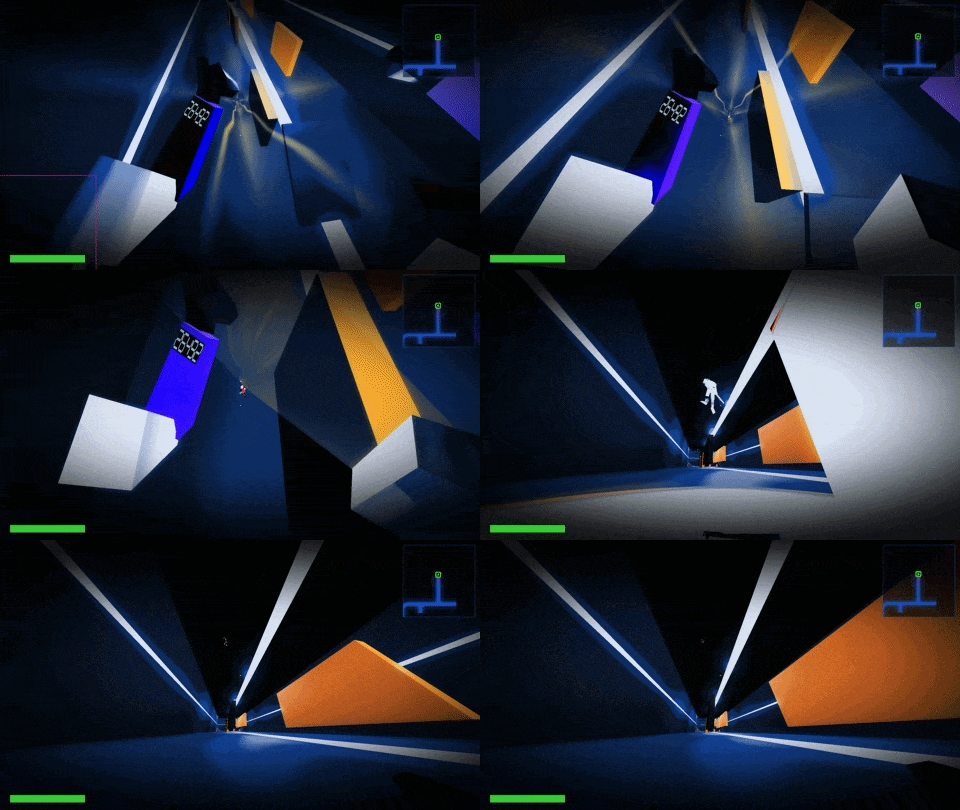
Wall running, grappling, sliding, air dashing. Speed is structural.
Wall runs lock at entry, push outward every frame to prevent clipping, and add vertical movement from look direction — look into the wall to climb, cut down to build speed before a jump. Consecutive wall jump chains ramp up to 3× base outward and upward force by jump six.
The grapple is look-driven, not pendulum physics. A perpendicular force based on the gap between your aim and the anchor makes swinging something you steer. Arm IK swaps left/right based on hook angle, blending over 0.2 seconds.
Air dash redirects momentum above speed threshold rather than cutting it. Below: flat boost. Above: course correction, not a reset. One per jump.
The environment reads your speed and responds to it.
Traversal surfaces are tagged at generation time. Above 40 m/s the system picks the optimal surface ahead and renders a hologram overlay — colour-coded by type, scanline shader, leader line from the HUD edge labelling the action.
Hitting the surface triggers an action-specific overdrive. Wall run lifts the speed cap. Slide boosts and refills air dashes. Jump pushes velocity up and forward. Grapple adds speed in look direction on hook connect.
Chaining activations builds a combo counter. Speed cap scales 80 → 150 m/s across five stages. Duration 2.5 → 8.5 seconds. At peak combo, drag collapses toward zero and the module geometry starts tearing.
Damage is a function of impact velocity. Slowing down is a liability.
Four variants by state and charge time: jab stays mobile, ground sweep sends enemies into pinball trajectory, slide uppercut launches you off the target, air lunge drives into them at 30–80 m/s. Damage: 20 + (relative speed × 2.5). Hitbox scales 1× to 4× with charge and speed.
Ground sweep pinball bounces bodies up to 6× at 90% speed retention per bounce, steering 80% toward the nearest living enemy between each hit. Floor contact flattens all bones 90° via direct physics server transforms — the pancake — which pops back on the next wall.
Overkill at 180+ damage: time scale to zero, emissive flash, overkill shake on a tween that ignores time scale so it still hits while everything is frozen.
No pre-authored geometry. Every module built at runtime from code.
BFS dungeon growth from the elevator exit with configurable room count and branching probability. A loop injection pass finds leaf nodes at least 3 floors apart in the tree and connects them back — circuits instead of dead ends. Room type is assigned from exit topology after the full tree resolves.
All module geometry is runtime MultiMesh batching by surface type: floor, walls, obstacles, neon strips, ceiling, frame. Module scripts are @tool — same code generates in-editor and at runtime. Modules are 300m × 60m, sized for the movement system.
Each floor gets a colour palette from golden ratio hue rotation pushed to the VHS shader. Neon strips lerp cyan → red as health drops. Seed is fully deterministic: same run seed produces the same dungeon, same enemy placement.